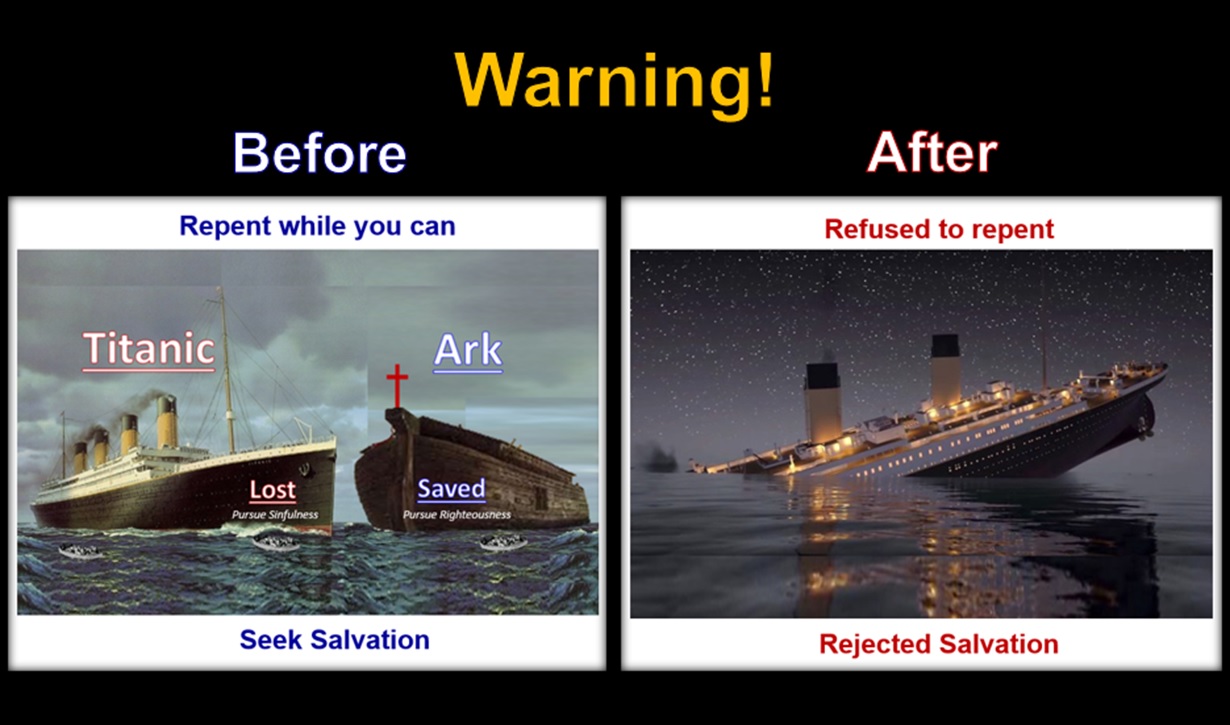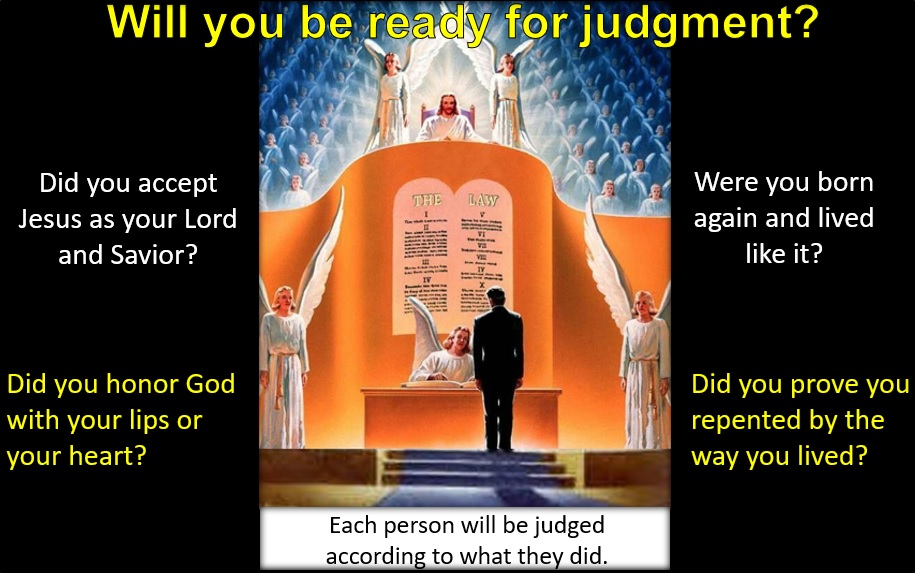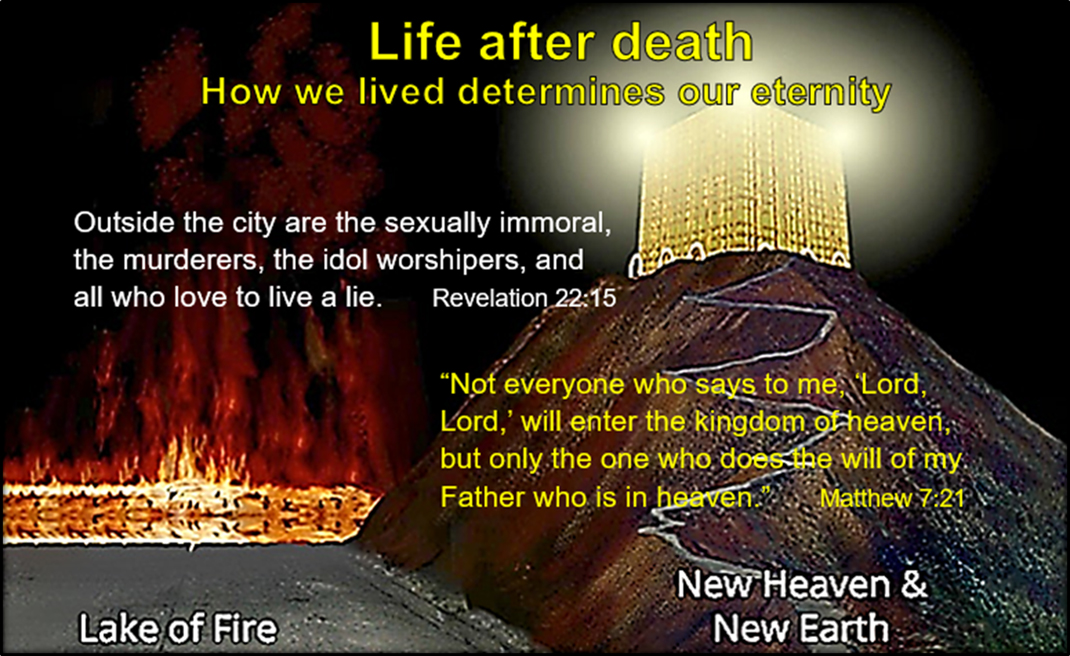
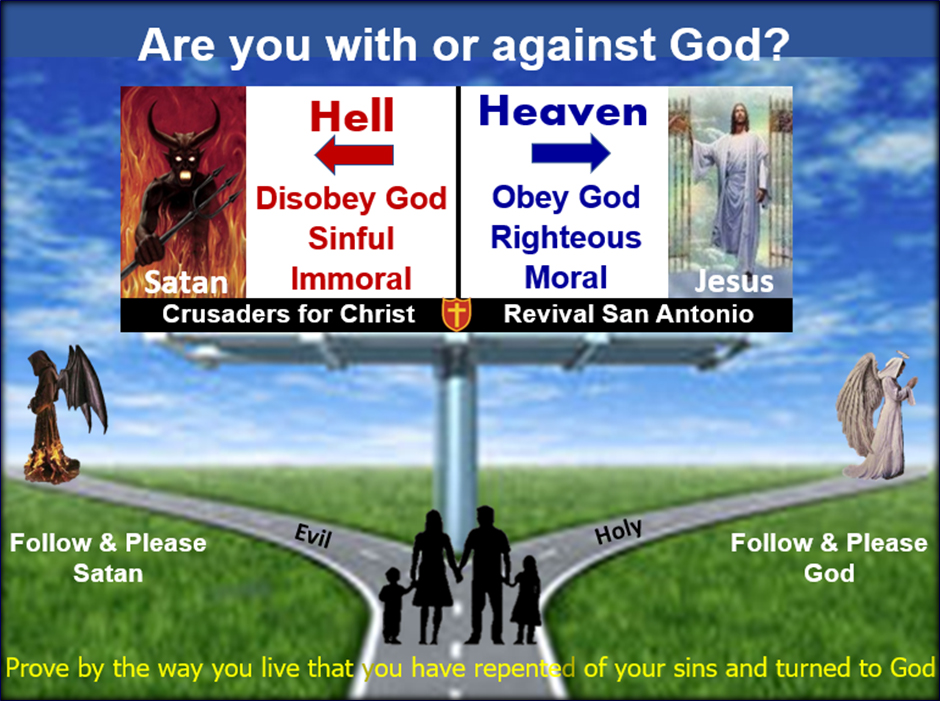
We must all face death someday. Are you prepared?
Man is destined to die once, and after that to face judgment.
Hebrews 9:27
That day or hour no one knows.
Matthew 24:36
Each of us will give an account of ourselves to God.
Romans 14:12
We have all sinned and fallen into temptation.
Even though I gave them all my laws, they act as if those laws don’t apply to them.
Hosea 8:12
There is not a righteous man on earth who does what is right and never sins.
Ecclesiastes 7:20
There is no one righteous, not even one.
Romans 3:10
For all have sinned and fall short of the glory of God.
Romans 3:23
If we claim to be without sin, we deceive ourselves and the truth is not in us.
1 John 1:8
Remember, it is sin to know what you ought to do and then not do it.
James 4:17
Warning:
You must speak my words to them, whether they listen or fail to listen, for they are rebellious.
Ezekiel 2:7
These people honor me with their lips, but their hearts are far from me.
Matthew 15:8
People may be pure in their own eyes, but the LORD examines their motives.
Proverbs 16:2
Whoever is not with me is against me, and whoever does not gather with me scatters.
Matthew 12:30
"When I say to a wicked man, you will surely die, and you do not warn him or speak out to dissuade him from his evil ways in order to save his life, that wicked man will die for his sin, and I will hold you accountable for his blood."
Ezekiel 3:18
Warn a divisive person once, and then warn them a second time. After that, have nothing to do with them.
Titus 3:10
9 Don’t you realize that those who do wrong will not inherit the Kingdom of God? Don’t fool yourselves. Those who indulge in sexual sin, or who worship idols, or commit adultery, or are male prostitutes, or practice homosexuality, 10 or are thieves, or greedy people, or drunkards, or are abusive, or cheat people—none of these will inherit the Kingdom of God.
1 Corinthians 6:9-10
19 When you follow the desires of your sinful nature, the results are very clear: sexual immorality, impurity, lustful pleasures, 20 idolatry, sorcery, hostility, quarreling, jealousy, outbursts of anger, selfish ambition, dissension, division, 21 envy, drunkenness, wild parties, and other sins like these. Let me tell you again, as I have before, that anyone living that sort of life will not inherit the Kingdom of God.
Galatians 5:19-21
You can enter God’s Kingdom only through the narrow gate. The highway to hell is broad, and its gate is wide.
Matthew 7:13
13 On the judgment day, fire will reveal what kind of work each builder has done. The fire will show if a person’s work has any value. 14 If the work survives, that builder will receive a reward. 15 But if the work is burned up, the builder will suffer great loss. The builder will be saved, but like someone barely escaping through a wall of flames.
1 Corinthians 3:13-15
12 “Look, I am coming soon, bringing my reward with me to repay all people according to their deeds. 14 Blessed are those who wash their robes. They will be permitted to enter through the gates of the city and eat the fruit from the tree of life. 15 Outside the city are the dogs—the sorcerers, the sexually immoral, the murderers, the idol worshipers, and all who love to live a lie.
Revelation 22:12-15
If they have escaped the corruption of the world by knowing our Lord and Savior Jesus Christ and are again entangled in it and are overcome, they are worse off at the end than they were at the beginning.
2 Peter 2:20
The unbelieving - their place will be in the fiery lake of burning sulfur. This is the second death.
Revelation 21:8
Blessed are the dead who die in the Lord . . . they will rest from their labor, for their deeds will follow them.
Revelation 14:13